Calcium Hypochlorite 70% vs TCCA 90%: Which Should You Choose?
Compare calcium hypochlorite 70% and TCCA 90%, including their water chemistry, common uses and important considerations for swimming pool operators.
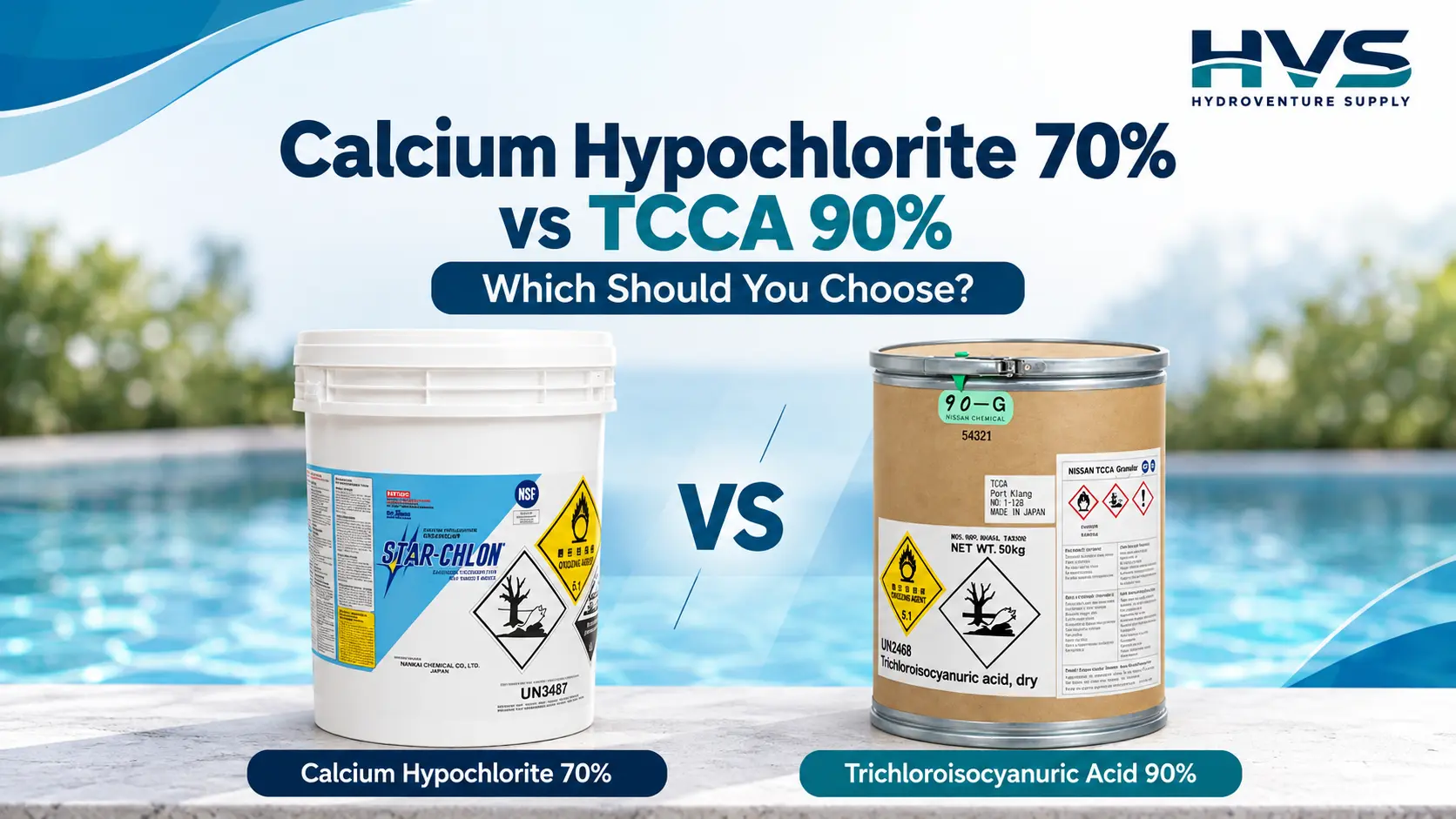
Calcium Hypochlorite 70% vs TCCA 90%: Which Should You Choose?
Choosing the right chlorine is an important part of maintaining clean, properly disinfected swimming pool water. Two common options are Calcium Hypochlorite 70% and Trichloroisocyanuric Acid (TCCA) 90%.
Both are widely used for swimming pool water treatment, but they differ in chemical composition, chlorine concentration and how they affect pool-water balance.
For swimming pool contractors, maintenance companies, commercial pool operators and homeowners in Malaysia, understanding these differences can help make chlorine selection and long-term maintenance more effective.
Quick Answer: Calcium Hypochlorite 70% vs TCCA 90%
Calcium Hypochlorite 70% is an unstabilised chlorine product commonly used for swimming pool disinfection, shock treatment and, where suitable, routine chlorination. It does not add cyanuric acid (CYA), but regular use increases calcium hardness.
TCCA 90% is a stabilised chlorine product that introduces cyanuric acid, helping protect chlorine from sunlight degradation. It is often used for routine chlorination, especially in outdoor pools, but continued use can increase CYA levels and lower pH.
Neither product is universally better. The most suitable option depends on existing water chemistry, pool usage, dosing equipment and maintenance requirements.
1. What Is Calcium Hypochlorite 70%?
Calcium hypochlorite, often called cal-hypo, is an inorganic chlorine compound used for swimming pool disinfection.
Products labelled 70% typically contain approximately 70% available chlorine by weight. When applied according to the manufacturer's instructions, calcium hypochlorite releases chlorine into the water to provide the free chlorine needed for disinfection.
Key characteristics
Unstabilised chlorine: Does not introduce cyanuric acid into the pool.
Effective disinfection: Can be used for routine chlorination or shock treatment where suitable.
Adds calcium: Repeated use gradually increases calcium hardness.
Alkaline product: May contribute to upward pH movement during treatment, requiring regular monitoring.
Common granular form: Application methods depend on the formulation and manufacturer's instructions.
When is calcium hypochlorite suitable?
Calcium hypochlorite can be useful when operators need to raise chlorine levels without adding more stabiliser.
It is also frequently selected for shock-treatment applications, including situations where an appropriate chlorination procedure is needed to address elevated chlorine demand or algae.
However, in pools with already-high calcium hardness, prolonged cal-hypo use may contribute to scaling or other water-balance problems.
Important: Calcium hypochlorite is not limited to shock treatment. Suitable products can also be part of a routine pool chlorination programme.
2. What Is TCCA 90%?
TCCA stands for Trichloroisocyanuric Acid, also known as trichlor.
It is an organic, stabilised chlorine compound typically containing around 90% available chlorine by weight.
Unlike calcium hypochlorite, TCCA introduces cyanuric acid into pool water. Cyanuric acid acts as a stabiliser, helping reduce chlorine loss caused by ultraviolet radiation from sunlight.
This is particularly relevant for outdoor swimming pools exposed to Malaysia's tropical sunshine.
Key characteristics
Stabilised chlorine: Introduces CYA, which helps protect chlorine against sunlight degradation.
High available chlorine concentration: Typically around 90% by weight.
Does not add calcium: Useful when additional calcium hardness is undesirable.
Acidic product: Can gradually reduce pool pH and total alkalinity.
Multiple forms: Commonly available as granules and slow-dissolving tablets, with different application methods.
When is TCCA suitable?
TCCA can be useful for outdoor pools requiring regular chlorination where stabiliser levels are appropriate.
Tablet products may suit compatible chlorine-feeding systems designed for gradual chlorine delivery. Granular products offer different application characteristics and must be used according to their specific labels.
However, continued TCCA use gradually raises CYA levels. Although stabiliser helps preserve chlorine in sunlight, excessive CYA reduces the speed of chlorine disinfection.
This means operators should not simply add TCCA indefinitely without measuring stabiliser concentration.
3. Calcium Hypochlorite 70% vs TCCA 90%: Comparison Table
Feature | Calcium Hypochlorite 70% | TCCA 90% |
|---|---|---|
Chemical type | Inorganic chlorine | Organic chlorine |
Available chlorine | Approx. 70% | Approx. 90% |
Stabilised | No | Yes |
Adds cyanuric acid | No | Yes |
Adds calcium hardness | Yes | No |
Typical pH influence | Alkaline; may raise pH | Acidic; may lower pH |
Common forms | Granules | Granules and tablets |
Routine chlorination | Possible with suitable products and equipment | Common application |
Shock treatment | Common application | Possible with appropriately labelled products |
Main long-term consideration | Calcium hardness accumulation | CYA accumulation and declining pH/alkalinity |
Does 90% mean TCCA is automatically better?
No. The percentages describe the nominal available chlorine concentration of each product.
Although TCCA 90% contains more available chlorine per kilogram than calcium hypochlorite 70%, selecting a chlorine product should also consider its effect on water balance, how it is applied, and the pool's operating requirements.
The better purchasing decision is not always the chemical with the highest percentage.
4. Which Chlorine Should You Choose for Your Swimming Pool?
The most suitable chlorine depends on the pool's conditions. The following situations illustrate common selection considerations.
Outdoor residential swimming pools
Sunlight exposure can accelerate chlorine loss in outdoor swimming pools.
TCCA may be useful when cyanuric acid is needed and its concentration can be maintained within an appropriate range.
Alternatively, calcium hypochlorite provides chlorine without adding CYA. This can be beneficial if the pool already has sufficient stabiliser.
What matters: Test free chlorine, pH and CYA before deciding which chlorine to use.
Commercial swimming pools, hotels and resorts
Commercial pools can experience changing chlorine demand due to frequent swimming, high bather loads and changing environmental conditions.
For these facilities, reliable chlorine control, appropriate dosing equipment and regular water testing are more important than choosing a particular product solely by its concentration.
Operators should evaluate:
Pool size and typical bather load.
Existing free chlorine, pH and stabiliser levels.
Chlorine dosing and circulation equipment.
Maintenance schedules and trained operator availability.
Chemical storage and handling requirements.
Applicable local health and operating requirements.
Both chlorine types may be appropriate for certain commercial applications, but product selection must follow the facility's water-treatment programme.
Pools with high cyanuric acid levels
If a pool already has excessive stabiliser, continued use of TCCA can make the problem worse.
An unstabilised chlorine source, such as calcium hypochlorite, may help avoid further CYA accumulation, provided calcium hardness and other water-balance conditions are suitable.
Changing chlorine type alone does not remove existing cyanuric acid. Corrective water management may also be necessary.
Pools with high calcium hardness
Where calcium hardness is already elevated, additional calcium from routine calcium hypochlorite use may increase scaling risk.
TCCA does not add calcium, making it an option worth evaluating if CYA and pH levels are also suitable.
Neither product should be chosen without considering overall water balance.
Pools using automatic chlorine feeders
Chemical feeder compatibility is essential.
Different chlorine products have different physical and chemical properties, so they must only be used in feeders specifically approved for that chemical and formulation.
Never assume calcium hypochlorite granules and TCCA tablets are interchangeable simply because both are chlorine products.
5. Important Water Chemistry and Safety Considerations
Regardless of which chlorine is selected, proper water testing and chemical handling remain essential.
Monitor water chemistry. Regularly measure free chlorine and pH. Also monitor total alkalinity, calcium hardness and cyanuric acid as appropriate to the treatment system. CYA is especially important where stabilised chlorine is used.
Follow product instructions. Use the manufacturer's label and Safety Data Sheet (SDS) for dosing, handling, storage and approved application methods.
Never mix different chlorine products. Calcium hypochlorite and TCCA are chemically incompatible in concentrated form. Mixing them, introducing them into the same container, or using incompatible residual chemicals in a feeder can cause dangerous reactions, including fire and toxic gas release.
Use suitable equipment and trained personnel. Commercial facilities should ensure chemical handling and chlorination equipment are managed by appropriately trained operators.
The information in this guide is general educational guidance. Actual treatment requirements depend on pool-water measurements, product specifications, equipment compatibility and applicable regulations.
6. What Should You Consider When Buying Swimming Pool Chlorine in Malaysia?
For contractors, maintenance companies and commercial pool operators, chlorine purchasing involves more than comparing product prices.
A few important considerations include:
1. Chemical type and application
Determine whether the maintenance programme calls for calcium hypochlorite, TCCA or another chlorine source. The product should match the intended application and compatible equipment.
2. Available chlorine concentration
Compare the available chlorine content rather than product weight alone. The amount of available chlorine affects the quantity required to deliver a specified treatment, but should not be the only purchasing consideration.
3. Manufacturer and documentation
Check the product identity, manufacturer, available technical specifications, packaging and Safety Data Sheet. Clear documentation is especially valuable for commercial operators purchasing chlorine in larger quantities.
4. Packaging and supply requirements
Choose pack sizes appropriate to consumption, handling capabilities, storage arrangements and replenishment frequency.
For professional pool maintenance companies servicing multiple locations, reliable supply planning can be just as important as the individual product price.
5. Long-term water-treatment costs
Consider the impact on pH, calcium hardness and stabiliser levels, along with any additional balancing chemicals, water management and maintenance requirements.
A product with a lower price per kilogram does not necessarily result in a lower overall treatment cost.
7. Frequently Asked Questions
Is TCCA 90% stronger than calcium hypochlorite 70%?
TCCA generally contains more available chlorine by weight. However, a higher percentage does not automatically make it a better choice for every swimming pool. Both can disinfect pool water when applied appropriately, and their different effects on water chemistry must be considered.
Which chlorine is better for outdoor swimming pools?
TCCA provides stabiliser that helps protect chlorine from sunlight. Calcium hypochlorite does not add stabiliser, which can be beneficial if the pool already has sufficient CYA. The most suitable option depends on actual pool-water test results.
Can calcium hypochlorite and TCCA be used in the same swimming pool?
Different chlorine products may be used at different times as part of a professionally managed treatment programme, but they must never be mixed directly or placed together in the same chemical feeder. Any chemical changeover must follow equipment and manufacturer safety procedures.
Does TCCA increase cyanuric acid?
Yes. TCCA introduces CYA during chlorination. Continued use can gradually raise stabiliser levels, making regular testing important.
Is calcium hypochlorite only used for shock treatment?
No. Calcium hypochlorite is commonly used for shock treatment, but certain products are also suitable for routine chlorination when used correctly and with compatible equipment.
Is chlorine powder better than chlorine tablets?
Neither form is always better. Product chemistry, dissolution characteristics, dosing equipment and the intended application are more important than the physical form alone. Always follow the product-specific instructions.
8. Swimming Pool Chlorine Available from Hydroventure Supply
Hydroventure Supply Sdn Bhd supplies swimming pool equipment and water treatment products in Malaysia, serving pool contractors, maintenance companies, commercial operators and residential pool owners.
Our chlorine range includes:
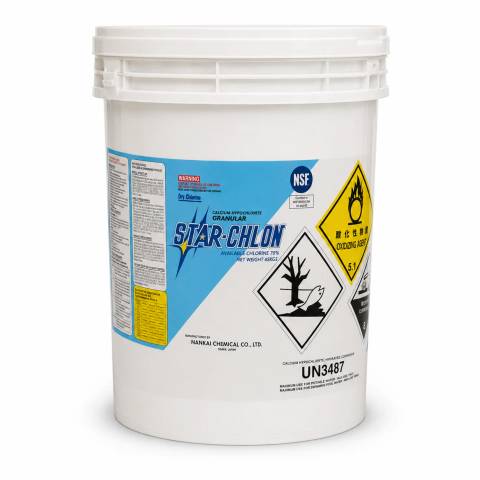
STARCHLON Calcium Hypochlorite 70% (Japan) — manufactured by Nankai Chemical.
SINOPEC Calcium Hypochlorite 70% (China) — an additional calcium hypochlorite option.
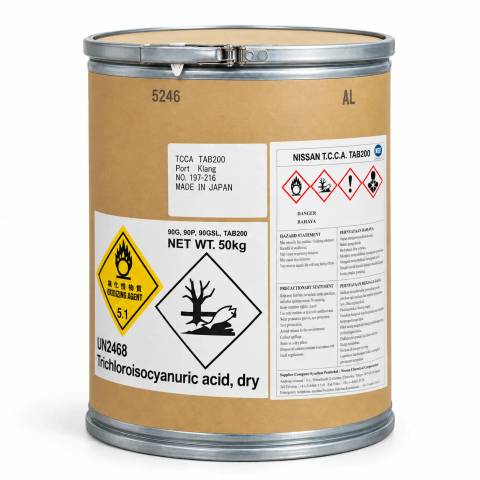
NISSAN TCCA 90% Granules (Japan) — manufactured by Nissan Chemical Corporation.
HVS TCCA 90% Powder / Granules (China) — available in different packaging sizes.
We also offer other chlorine formulations, including tablets and liquid chlorine, for suitable swimming pool applications.
Based in Sungai Buloh, Selangor, Hydroventure Supply supports customers seeking pool-water treatment products, commercial quantities, product information and quotations.
Need Help Choosing Swimming Pool Chlorine?
Whether you're maintaining a residential swimming pool or managing chlorine procurement for multiple commercial pools, our team can assist with product information, availability and quotations.
Explore Our Swimming Pool Chlorine Products
Contact Hydroventure Supply for current product specifications, packaging and supply arrangements.
Need help choosing the right product?
Send us a photo, label or model number on WhatsApp and we will match it for you.