How Much Chlorine Should I Add to My Swimming Pool
Learn how much chlorine your swimming pool needs with our simple 70% chlorine dosage chart, calculation examples, and pool care tips for Malaysia.
How Much Chlorine Should I Add to My Swimming Pool?
Not sure how much chlorine your swimming pool needs? Adding too little can leave your water unsafe, while adding too much wastes chemicals and may cause irritation.
The good news is that calculating the right amount is easier than you might think.
How Much Chlorine Does a Swimming Pool Need?
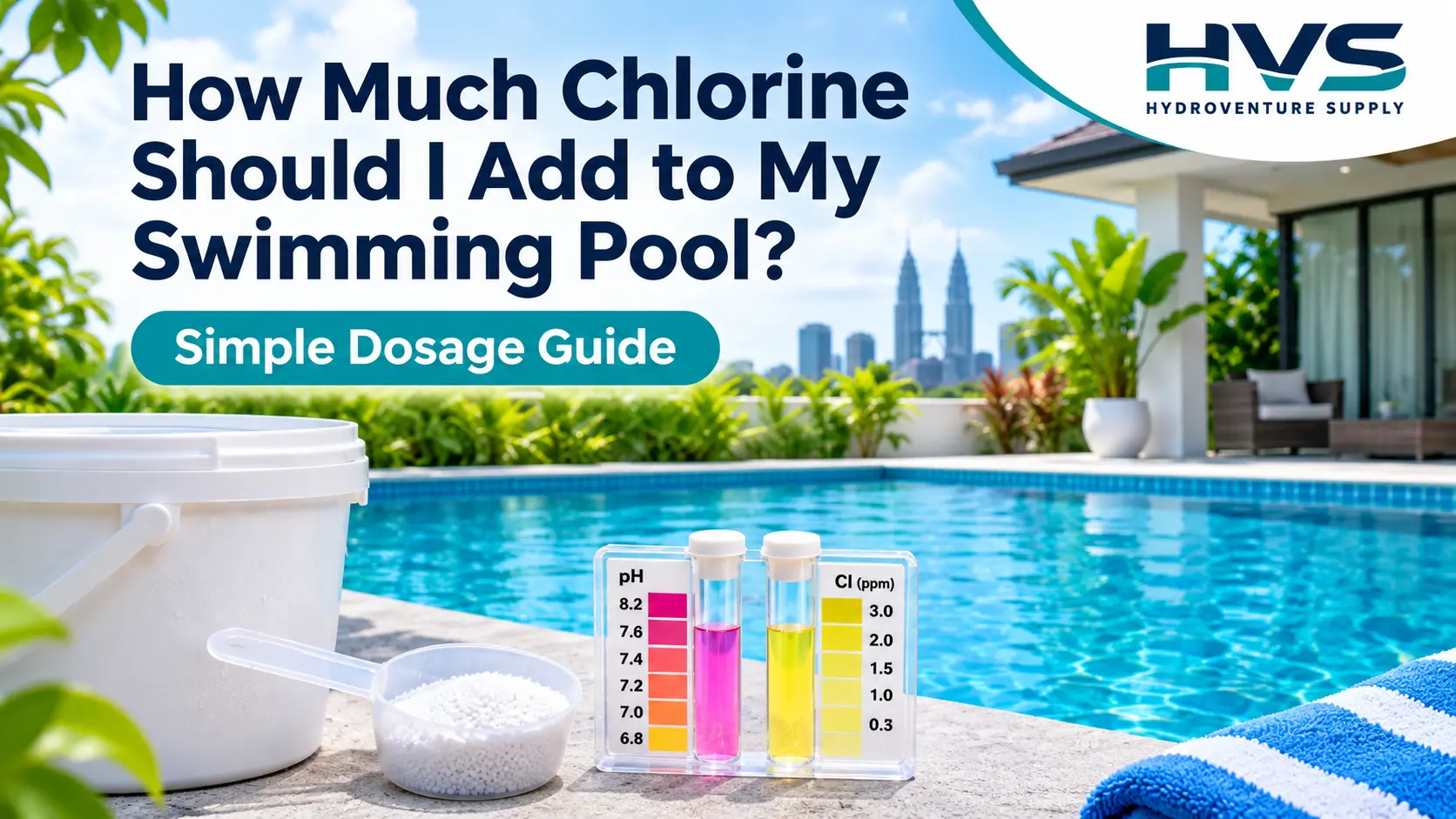
For a typical home swimming pool, around 2 ppm (parts per million) of free chlorine is a practical starting target.
Free chlorine is the chlorine available to disinfect your pool water.
1–3 ppm: A common residential range for pools without stabilizer.
At least 2 ppm: Recommended when using stabilized chlorine products such as TCCA.
pH 7.2–7.8: Helps chlorine work effectively and keeps the water comfortable for swimmers.
The amount of chlorine you need to add depends on your pool size, current chlorine level, and chlorine product.
Calculate Your Swimming Pool Chlorine Dosage
Not sure how much chlorine to add? Use our free calculator below to estimate the amount of 70% calcium hypochlorite (granular chlorine) your pool needs.
Swimming Pool Chlorine Dosage Calculator
70% calcium hypochlorite granules · Routine maintenance
For 70% calcium hypochlorite granules only. Not for TCCA tablets, liquid chlorine, green-pool shock treatment or public-pool operational dosing.
Actual chlorine demand varies. Follow product-label instructions, circulate the water and retest. Never mix pool chemicals. This estimate does not guarantee safe swimming conditions.
Simple Example: A 50,000-Litre Pool
Let's say your swimming pool has:
Current chlorine: 0.5 ppm
Target chlorine: 2.0 ppm
Chlorine increase needed: 1.5 ppm
Using 70% calcium hypochlorite, you'll need approximately 107 grams of chlorine granules
Remember, this is an estimated amount for routine chlorine adjustment. Always follow the product instructions and retest your water after treatment.
Swimming Pool Chlorine Dosage Chart
Here is a quick reference for 70% calcium hypochlorite (granular chlorine), commonly used for pool water treatment.
Pool Size | Raise by 1 ppm | Raise by 2 ppm |
|---|---|---|
10,000 litres | 14 g | 29 g |
20,000 litres | 29 g | 57 g |
30,000 litres | 43 g | 86 g |
50,000 litres | 71 g | 143 g |
These are approximate calculated amounts for increasing free chlorine, not fixed daily doses. Actual requirements may vary. Always follow your chlorine product's label and retest the water.
Simple Example: A 50,000-Litre Pool
Suppose your swimming pool has:
Current chlorine: 0.5 ppm
Target chlorine: 2.0 ppm
Chlorine needed: An increase of 1.5 ppm
Using 70% calcium hypochlorite, the calculated amount is approximately 107 grams.
You don't need to add enough for a full 2 ppm because your pool already contains some chlorine.
3 Simple Steps to Add the Right Amount
Step 1 — Test your pool water
Use a suitable test kit to check your free chlorine and pH levels. A free-chlorine test, such as DPD, is important for accurate dosing.
Step 2 — Calculate how much you need
Find your pool's water volume and work out the difference between its current chlorine reading and your target level.
Don't know your pool volume? For a rectangular pool:
Length × Width × Average Depth × 1,000 = Litres
For example, an 8 m × 4 m pool with an average depth of 1.5 m holds approximately 48,000 litres.
Step 3 — Add chlorine, circulate, and retest
Follow the instructions on your chlorine product, allow the pool water to circulate, and test again before adding more. Keep swimmers out until the water meets the appropriate swimming conditions.
Why Does My Pool Keep Losing Chlorine?
In Malaysia, swimming pools can lose chlorine quickly because of:
Strong sunlight: UV rays break down chlorine, especially in outdoor pools.
Heavy rain: Rainwater and runoff can change your pool's water balance.
Frequent swimming: Sweat, dirt, and other contaminants use up chlorine.
Incorrect water balance: High pH or unsuitable stabilizer levels can reduce chlorine effectiveness.
If your chlorine keeps dropping, don't simply add more every time. Test the water and investigate the cause.
Which Type of Chlorine Should I Use?
Two common choices are:
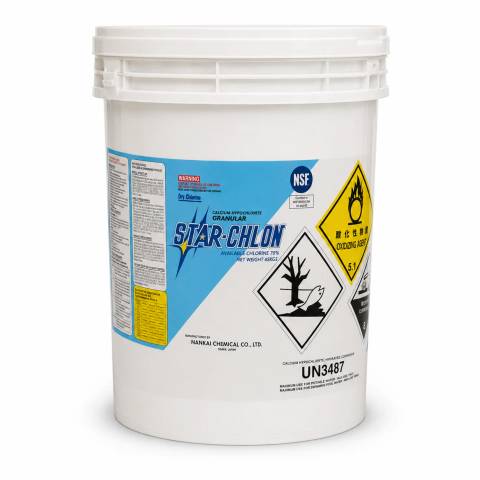
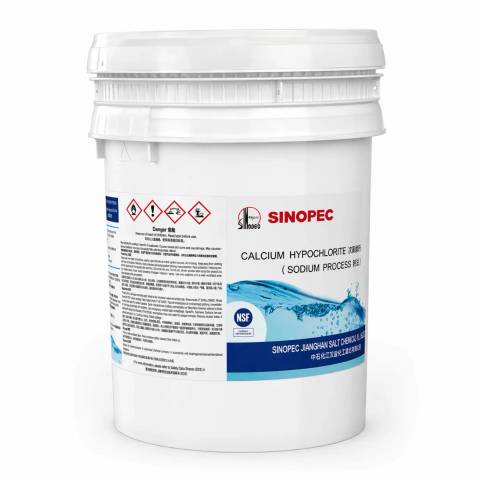
Calcium Hypochlorite 70% (Granular Chlorine)
Suitable for regular chlorine adjustments and certain shock-treatment applications when used according to the product label.
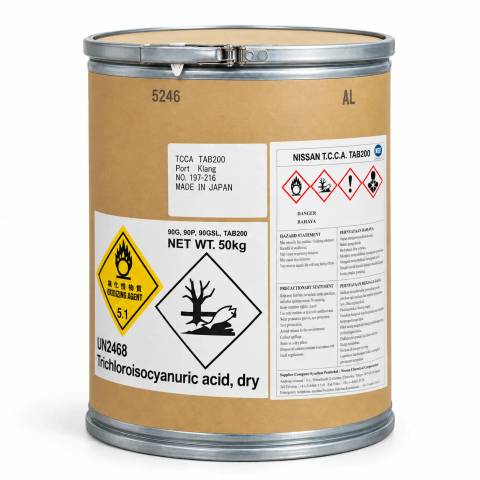
TCCA 90% (Stabilized Chlorine)
Contains stabilizer that helps protect chlorine from sunlight. Tablets are commonly used for gradual, ongoing chlorination through a compatible feeder. Regular stabilizer testing is important because it can build up over time.
Not sure which is suitable for your pool? Read our Calcium Hypochlorite 70% vs TCCA 90% comparison guide.
Keep Your Swimming Pool Clean and Balanced
Maintaining the right chlorine level doesn't have to be complicated. Test your water regularly, know your pool volume, and add only the amount needed.
Hydroventure Supply supplies swimming pool chlorine and water treatment products in Malaysia, including:
Need help choosing the right chlorine for your pool? Contact Hydroventure Supply for product guidance and quotations.
Safety reminder: Never mix different chlorine products or pool chemicals together. Follow the manufacturer's handling, storage, and dosing instructions.
References
This guide is intended for routine home swimming pool care. Public and commercial pools must follow the applicable operating requirements.
Frequently Asked Questions
How often should I add chlorine to my swimming pool?
There is no fixed amount you must add every day. Test regularly, especially during hot weather or frequent pool use, and add chlorine when needed.
Should I add chlorine after heavy rain?
Not automatically. Test the chlorine and pH after heavy rain, particularly if runoff or dirty water enters the pool. Adjust only when necessary.
Can I swim immediately after adding chlorine?
Follow the product's instructions, allow proper circulation, and retest before swimming. Never swim while chlorine levels are outside the appropriate operating range.
Can I use this dosage for a green swimming pool?
Not necessarily. Green pools may need a different treatment process, including shock treatment, cleaning, and filtration. The chart above is for normal chlorine adjustments.
Need help choosing the right product?
Send us a photo, label or model number on WhatsApp and we will match it for you.